

🥧 Pie Crust Science, Part II: How to Save Your Crust Edges
What Happens in the Oven (and How to Choose the Right Fat)

Thanksgiving is just a few days away, which means many of us are rolling out dough, chilling butter, and hoping our crusts don’t shrink, crack, or burn before the big day.
Last week we talked about flaky vs. mealy crusts. This week, we’re digging deeper into what really shapes your crust: the type of butter you use, the chemical reactions happening in the oven, and a tool every pie baker should have on standby.
Let’s get into it.
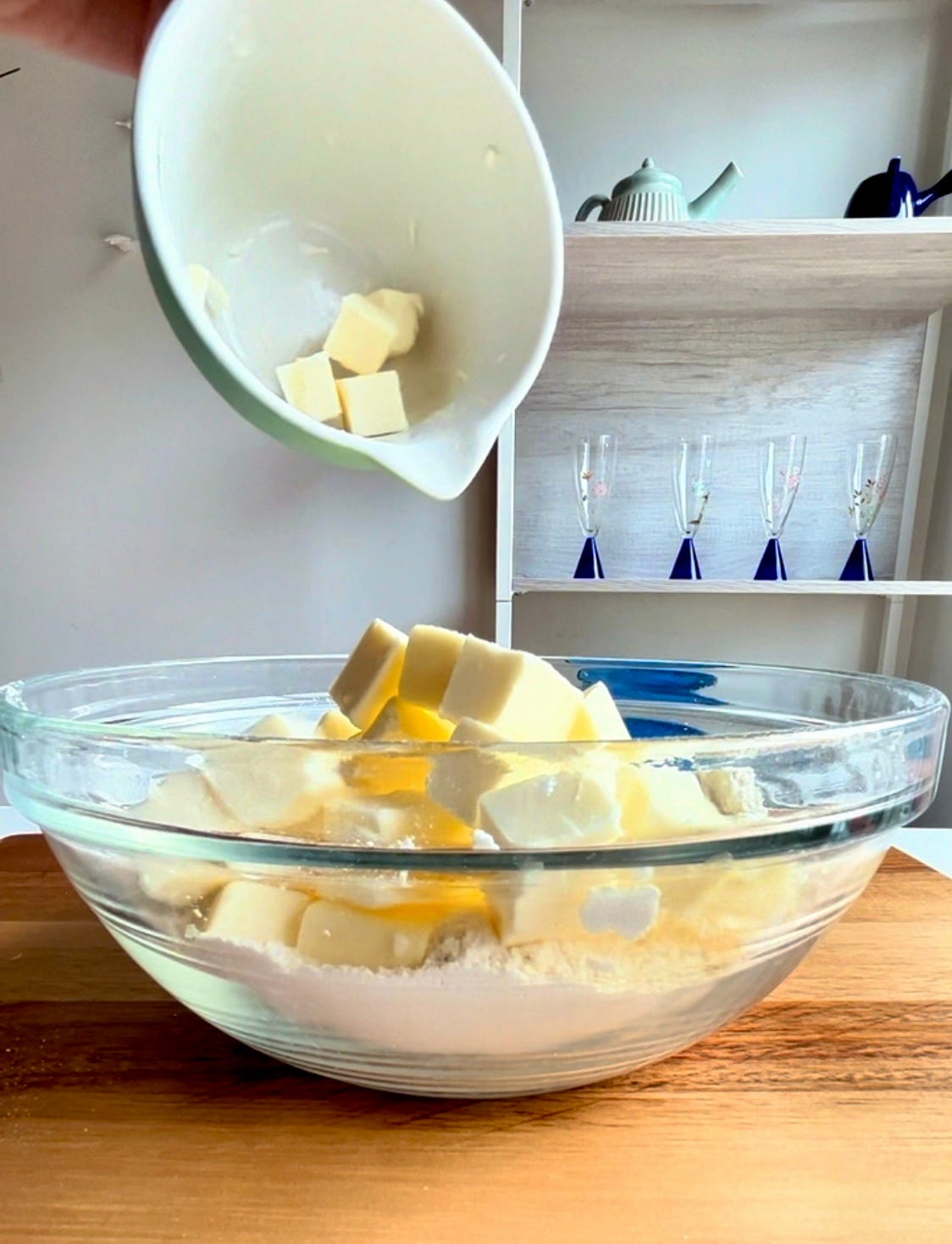
🧈 Butter Types for Pie Crusts
(…and how they actually behave in the oven)
Amish-Style Butter
Butterfat: 84–85%
Water: ~11–12%
Crust Result:
Rich flavor
Tender and slightly less dramatic flake
Very forgiving and easy to work with
Why:
Higher fat = fewer steam pockets.
You still get lift, but with a softer, richer crumb.
American Sweet-Cream Butter (Standard U.S.)
Butterfat: 80%
Water: ~16%
Crust Result:
The most dramatic flakes
Strong steam formation → big visible layers
Clean, mild flavor
Why:
More water = more steam = more puff and flake.
European-Style Butter (Cultured, 82–86% fat)
Butterfat: 82–86%
Water: ~12–15%
Crust Result:
Deep, buttery flavor
Flaky but more tender than American butter
Softer at room temp → needs colder handling
Why:
High fat = rich texture
Slightly lower water = fewer—but still very good—steam pockets.
🥧 Pie Crust Takeaways
Most Flake:
➡️ American sweet-cream (more water → more steam)
Best Flavor:
➡️ European or Amish (cultured, richer cream profile)
Best Balance:
➡️ Amish (great flavor + solid flakes)
⚗️ Key Reactions During Baking
What’s actually happening inside your oven:
90–95°F — Fat Melting
Butter begins to soften + melt
Creates steam pockets in flaky dough
Helps crumbs bind in cookie-style crusts
150–180°F — Starch Gelatinization
Starches absorb water
Dough starts setting and firming
160–180°F — Gluten Coagulation
Gluten proteins tighten
Crust “locks in” its shape, crispness, and structure
280–330°F — Maillard Browning
Proteins + sugars react
Golden crust, deeper aroma, toasted flavor
This is where the magic happens
320°F+ — Sugar Caramelization
Sugars melt + break down
Adds color and caramel notes
Especially key for graham or cookie bases
Note:
All of these overlap. The timing — not just the temperature — is what separates a pale crust from a beautifully layered, golden one.
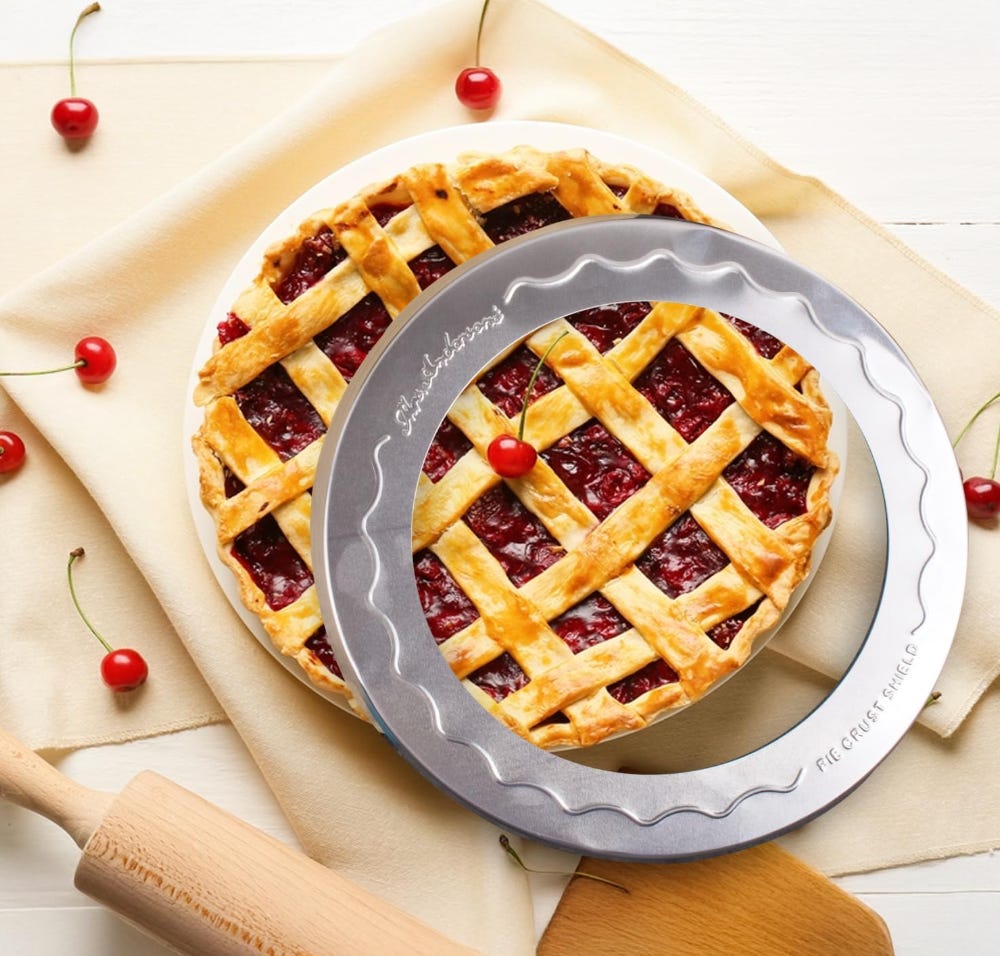
🛡️ Pie Shields: What They Are + Why They Matter
If you’ve ever pulled a pie out of the oven and thought, “How did my edges burn already?” — you’re not alone. The rim of a pie browns faster than everything else, and there’s actual science behind it.
Here’s why shields help so much:
Why the Edges Burn First
1. The rim heats faster
It’s thinner and has less mass
It sits higher, catching more direct heat from the oven walls
2. Butter at the edges melts first
The milk solids brown quickly
Color accelerates fast once browning starts
3. The rim reaches browning temps long before the bottom
Maillard browning starts around 300°F
Sugar caramelization starts around 320–350°F
In a 400–425°F blind bake, your edges can hit those temperatures in minutes.
How a Pie Shield Helps
A shield (or a simple foil collar):
Blocks direct radiant heat
Slows browning at the rim
Allows the bottom + center to catch up
Prevents burning without overbaking
🥧 Types of Pie Shields
There are a few different kinds of pie shields you can use — foil, silicone rings, and metal ones — and they all do the same basic job: protect the edges so they don’t brown before the rest of the crust. If you don’t bake often, foil is perfectly fine. If you bake a lot, a silicone or metal ring is a little easier to pop on and off mid-bake.
When to add it:
👉 As soon as the edges turn light golden but the bottom is still pale.
Best Practices for Even Browning
Chill your dough well — cold fat slows early browning
Blind-bake with weights — helps the bottom heat evenly
Add the shield as soon as color appears — don’t wait
Result:
A perfectly even, golden pie crust — no burnt rims, no pale bottoms.
👩🔬 Want More?
Want to learn more? Have a questions? Reply and let me know—I always love talking about the science behind baking.
Happy baking,
Sarah @HalfBatchBaking | Sweet Sundays
I can't bake worth a darn... but I still love reading these. The analysis, causal focus, and attention to interplay between different variables is awesome