

Let’s Talk Gingerbread
From Soft Loaves to Sturdy Houses: Gingerbread, Explained

Gingerbread is one of those things I really only bake this time of year. It shows up in so many forms around the holidays, from candy-studded houses to decorated gingerbread men to spiced loaves that feel more like cake than cookie.
What’s always fascinated me is that all of these very different bakes share the same name. Gingerbread hasn’t always meant what we think it does today. Over time, it’s gone through a few distinct phases. It started as something closer to bread, later became firm enough to build with, and eventually turned into the cookies we decorate and eat each December.
At some point, I started wondering why these versions behave so differently. Why some gingerbread stays soft and sliceable, while other gingerbread is sturdy enough to hold its shape. The answer comes down to small shifts in ingredients, moisture, and technique.
Today, I’m breaking down the science behind each type of gingerbread and how those changes shaped what we bake now.
Gingerbread Begins as Bread
The earliest versions of gingerbread were much closer to bread or cake than to cookies. In medieval Europe, gingerbread usually meant a spiced, honey-sweetened loaf. These were often made with breadcrumbs or coarse flour and baked into dense, sliceable cakes that showed up at festivals and religious celebrations.
Honey did a lot of the heavy lifting here. It’s hygroscopic, which means it attracts and holds onto water. That helped these loaves stay soft and moist long after baking. Breadcrumbs and coarse flours absorbed liquid slowly, creating a tight but tender crumb rather than anything crisp.
In medieval England, the word “gingerbread” originally referred to preserved ginger, not baked goods at all. It wasn’t until the 1400s that the name started to apply to spiced breads and cakes.
This version of gingerbread was meant to be eaten, sliced, and shared. Soft, fragrant, and comforting.
When Gingerbread Became Something You Could Build With
As baking techniques evolved, so did gingerbread. By the 16th century, European bakers, especially in Germany, were producing firmer, drier gingerbreads with lower moisture and higher sugar content. These recipes weren’t meant to be tender; they were meant to hold their shape.
This is when gingerbread became something new: construction material.
Gingerbread houses emerged in German Christmas markets, built from sturdy cookie walls and held together with royal icing. Decorations often included foil and gold leaf, signaling that gingerbread was both food and ornament. Their popularity surged after the Brothers Grimm published Hansel and Gretel in 1812, a story centered on a house made entirely of sweets.
The science here is all about structure. Lower liquid content limits steam formation, while high sugar concentrations promote glass-like hardening as the cookies cool. Longer bake times drive off moisture, leaving behind a rigid matrix of sugar and flour. Royal icing, which is mostly sugar with a small amount of egg white protein, dries through evaporation and crystallization, acting like edible cement.
Gingerbread houses exist not because they’re whimsical, but because the dough dries hard enough to become architecture.
Finally, the Gingerbread Cookie
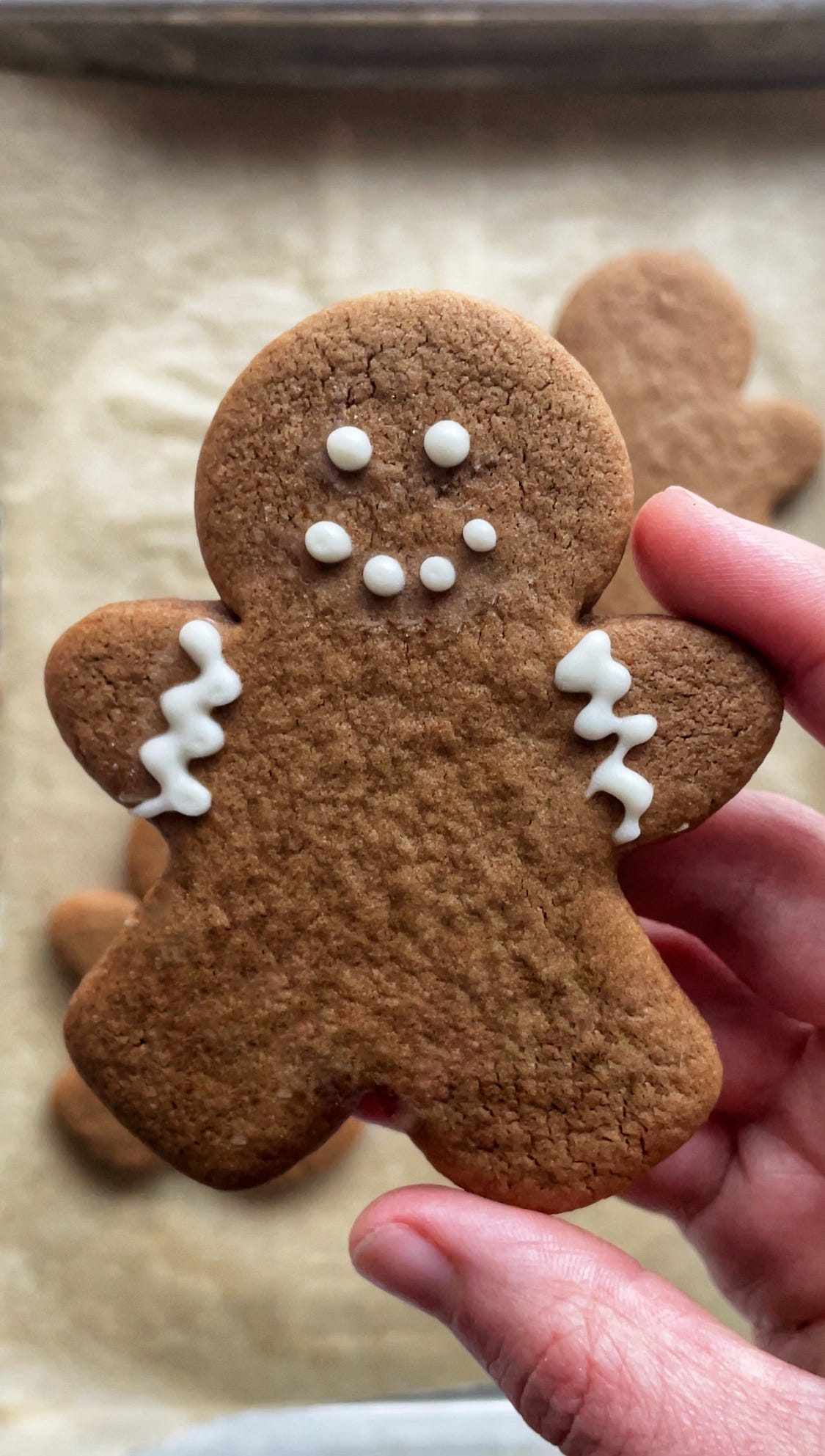
Only later did gingerbread fully become something meant to be eaten as a cookie. By increasing fat, managing moisture, and shortening bake times, bakers shifted gingerbread from structural to snackable.
Fat plays a huge role here. Butter coats flour proteins, limiting gluten development and creating a more tender texture. Shorter bake times preserve moisture, while sugar still contributes crisp edges and snap as it caramelizes. Depending on the ratios, gingerbread cookies can land anywhere from chewy to crunchy, but they’re no longer designed to support walls.
When gingerbread made its way to the American colonies, preferences shifted again. Softer, cake-like gingerbreads became popular, often baked in loaves. The first American cookbook, American Cookery by Amelia Simmons, included several gingerbread recipes that span that same range we still see today.
Soft loaves. Chewy cookies. Crisp panels for houses.

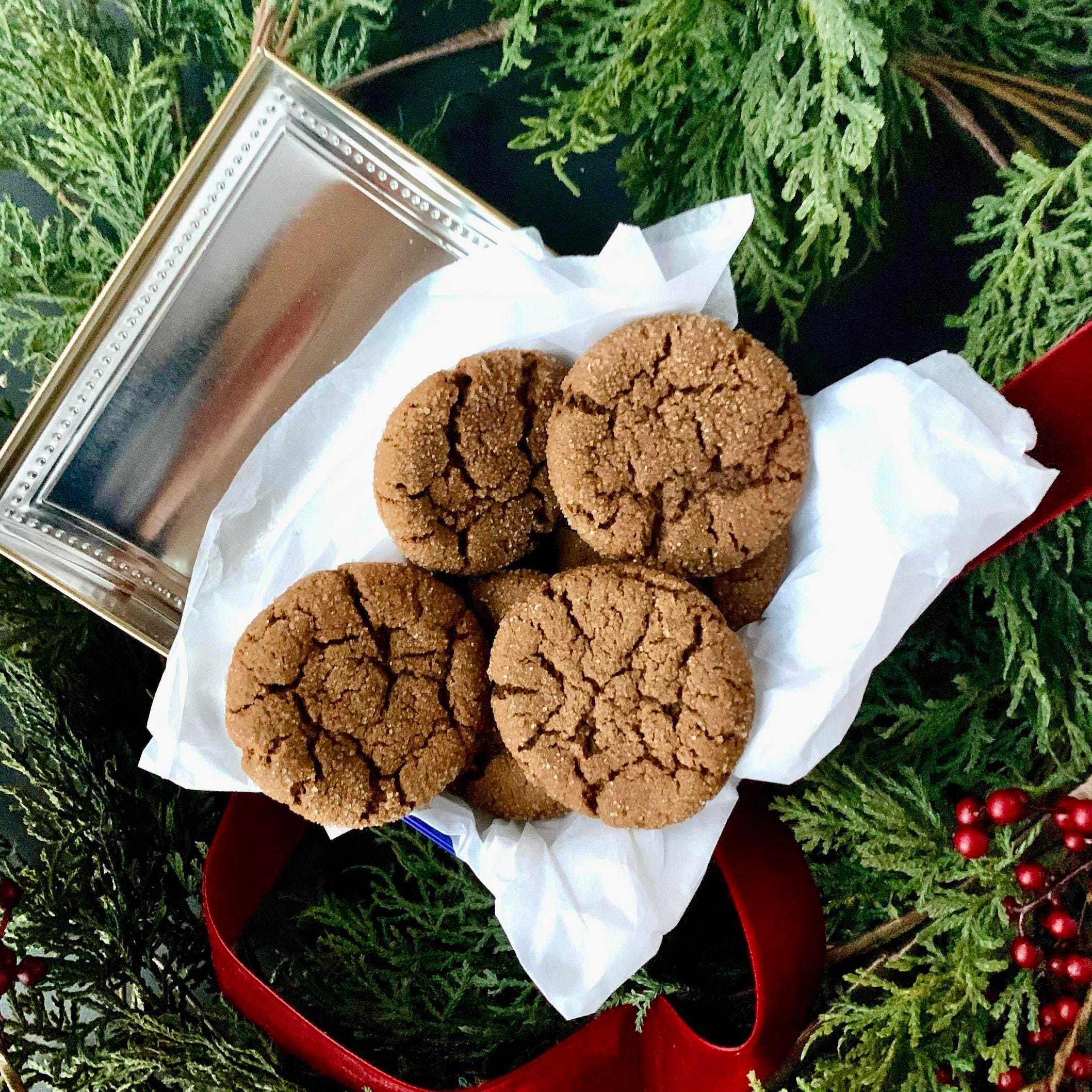
Gingersnaps Recipe
Ingredients
2 cups all-purpose flour
2 tsp ground ginger
1 tsp baking soda
1/2 tsp ground cloves
1/2 cup unsalted butter, softened
1 cup granulated sugar
1 large egg
4 tbsp molasses
1 tsp vinegar
Instructions
In a medium bowl, whisk together the flour, ground ginger, ground cloves, baking soda, and salt. Set aside.
In a large bowl or stand mixer fitted with a paddle attachment, beat the sugar and softened butter for a few minutes until lightened in color and fluffy, scraping the sides of the bowl as needed.
Add the egg to the sugar and butter mixture, mixing until well combined. Remember to scrape the sides of the bowl between mixing.
Add the molasses and vinegar to the mixture, beating until well combined.
On low speed, gradually add the flour mixture in 1/3 cup increments, mixing until there are no white streaks before adding the next portion. Mix until just combined.
Shape the dough into 1-inch balls and roll them in sanding sugar. Place the balls 2 inches apart on a baking tray lined with parchment paper. Gently flatten each ball with the palm of your hand.
Bake at 325°F (163°C) for 15-20 minutes or until the edges are set.